
Practice-based research .13
Making this my 'neither' space, how the land I love refuses to love me back and my feelings toward Museum of the Home


This blog entry includes some comments made by Jamaican Prime Minister Andrew Holness last week.
The prime minister made the comments Thursday during his contribution to the 2026/2027 Budget Debate in the House of Representatives as he outlined that the country’s core national values on gender will not change.
“When it comes to our values, there are things that define us as Jamaicans that we not going to change on those. A man is a man and a woman is a woman. We are not going to change on that,” Holness said. (Jamaican Observer, 2026)
I expressed my thoughts on this both in my formal academic space (an ever growing word count in a document saved in various places on my laptop) and my more personal and private instagram page this week.
Somehow, between the rigid UI (user interface) that instagram and its caption section offers and the academic borders of my essay, I’ve written something that blurs the tone of both formal and informal. So since I refuse to segregate what I want to say via social media and what I want to say in my assignment, I have decided that what I have written belongs in neither spaces and actually would be more comfortable right here on this platform, I am calling it my neither space, where something doesn't work in any of the other platforms but might work here:
In Simone Beauvoir’s acclaimed book Second Sex, Beauvoir explains that differences in the sexes during childhood are not biological but in fact imposed upon the child by others, supporting the theory that gender, like race, is socially constructed:
One is not born, but rather becomes, woman. No biological, physical or economic destiny defines the figure that the human female takes on in society; it is civilisation as a whole that elaborates this… For girls and boys, the body is first the radiation of a subjectivity… they apprehend the universe through their eyes and hands, not through their sexual parts. The drama of weaning takes place in the same way for infants of both sexes; they have the same interests and pleasures…they feel the same jealousy at birth of a new child; they show it with the same behaviour: anger, sulking, urinary problems…the intervention of others in the infant’s life is almost originary, and her vocation is imperiously breathed into her from the first years of her life. During the first three or four years of life, there is no difference between girls and boys attitudes… (Beauvoir, 1949)
Paul B. Preciado later writes:
“…the fact that it is impossible for a child to rebel politically against the discourse of adults: the child is always a body whose right to self-govern is not recognized… Allow me to…speak in the name of the governed child that I was… I was once that child that Frigide Barjot (Brigitte Bardot) boasts about protecting… Who defends the rights of the queer child? The rights of the little intersex child? Of the trans child? … The rights of the non-binary child? Who defends the rights of the children to change gender if they want to? The rights of the child to fee self-determination of gender and sexuality? Who defends the rights of the child to grow up in a world without either sexual or gender violence? … it began with ‘A man should be a man and a woman should be a woman, as God willed it,’ it continued with ‘the natural thing is the union of a man and a woman, that’s why homosexuals are sterile,’ and it ended with the implacable conclusion, ‘if my child is homosexual I’d rather kill him.’ And this child was me. (Preciado, 2020)
It is deeply within the hegemonic home (something I am investigating in my PhD research) that borders of identity are first erected. Borders which are enforced from childhood are then embedded within society’s manual for rearing children so that these borders might be rebuilt repeatedly and protected throughout generations. bell hooks once wrote that the most oppressed people in society due to their lack of rights are children and we are reminded of this in the way gender is imposed upon the child from very early. A child’s lack of choice in their very own body, thoughts and feelings remains evident right into their late teenage years and even then, they are teased with a freedom held in the hostile hands of other adults, namely the government. Whilst many people are being accused of pushing an agenda in the form of educating children about the diversity of gender and sexuality in school, it is in fact the heterosexual and cisgendered agenda that has been violently pushed onto children for centuries, anything after and outside of that is a challenging of that agenda. It’s not the queer community that are ‘fixated’ on gender, but it is the ruling binary genders that believe fervently that gender must dictate everything we do, hence why historically many of the world’s injustices stem from a gendered violence: men are paid more than women for the same job, women could not vote until a later date, gender based violence, the list goes on and then extends on for genders that are racialised. It is the trans non-binary community in particular who are proposing an abolition of such separations. The non-binary person lives beyond the binary, doesn’t engage with it, destroys it, or reinvents it all together. It is trans non-binary people who are, if anything, the least ‘fixated’ on gender, which is why they do not want any part of it. But the heterosexual regime remains strong (for now) because it is in constant cahoots with capitalism. Western capitalism, a specific brand of capitalism, only works if heterosexuality is the dominant sexuality. Like many things constructed by society, they often require a group of people to be at the bottom in order for them to stand taller and in this case, the queer trans person sits right at the bottom of the gender and sexuality hierarchy. And so the problem with this rhetoric of “a man is a man, a woman is a woman” and the constant fixation of biology is that it always ends in violence, especially in Jamaica, a country still mentally enslaved and lacking in the areas that really matter. I love Jamaica but I wish Jamaicans there could love themselves enough to think critically and then maybe, they could love me as much as I love them.
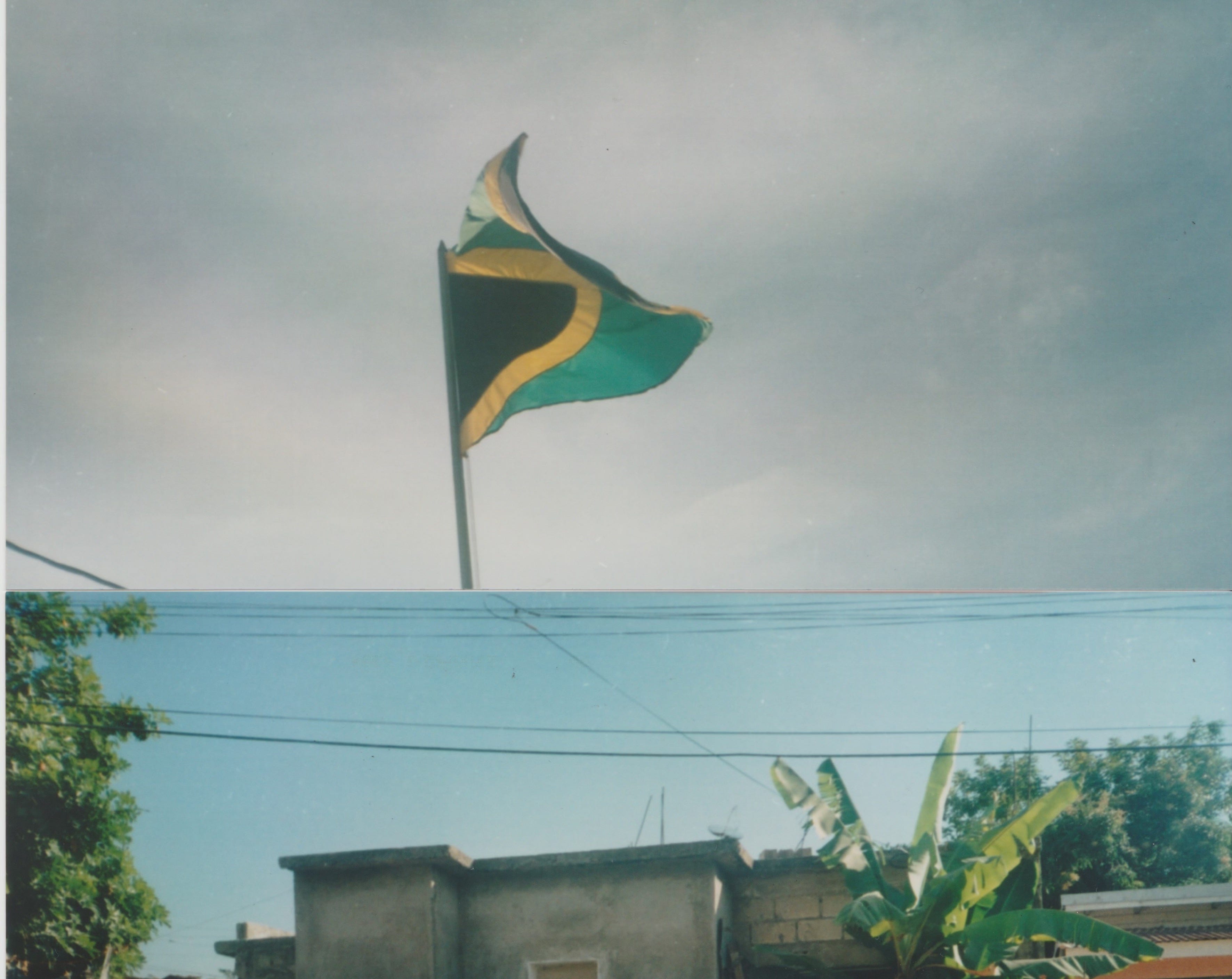
Image credit: Untitled, Kingston, Jamaica, Exodus Crooks, 2021
While I am here, I also want to make note of a few things as I take up my placement (research residency) at Museum of the Home this week:
Alongside a gender binary, we are used to a binary of feelings; we struggle to see that someone might hold more than one thought or feeling at the same time but please bear with me and engage in understanding my ‘and’ and not my ‘or’ as you read the following. It is important to meet me where I’m at when I write, to read with my voice in mind, with my voice and your voice, as if we are reading aloud at the same time (like we used to do in Primary school). What I am talking about here is my ability to feel uncomfortable with some elements of the gallery and also grateful for the opportunity to look at the collection of some brilliant artwork and artists, curated carefully by some great curators.
So let’s begin by echoing Azeezat Johnson’s call for accountability and reflection on the statue of Robert Geffrye. In 2021, I refused an invitation to attend the opening night of a show in which my work was exhibiting because I was particularly sensitive to the disregard for Black life we were seeing every day, the performative allyship on social media and the ignorance to it all that I was experiencing with my then manager at work. So attending a gallery where the statue of a slave owner would be standing tall over me was all too much, and maybe still is.
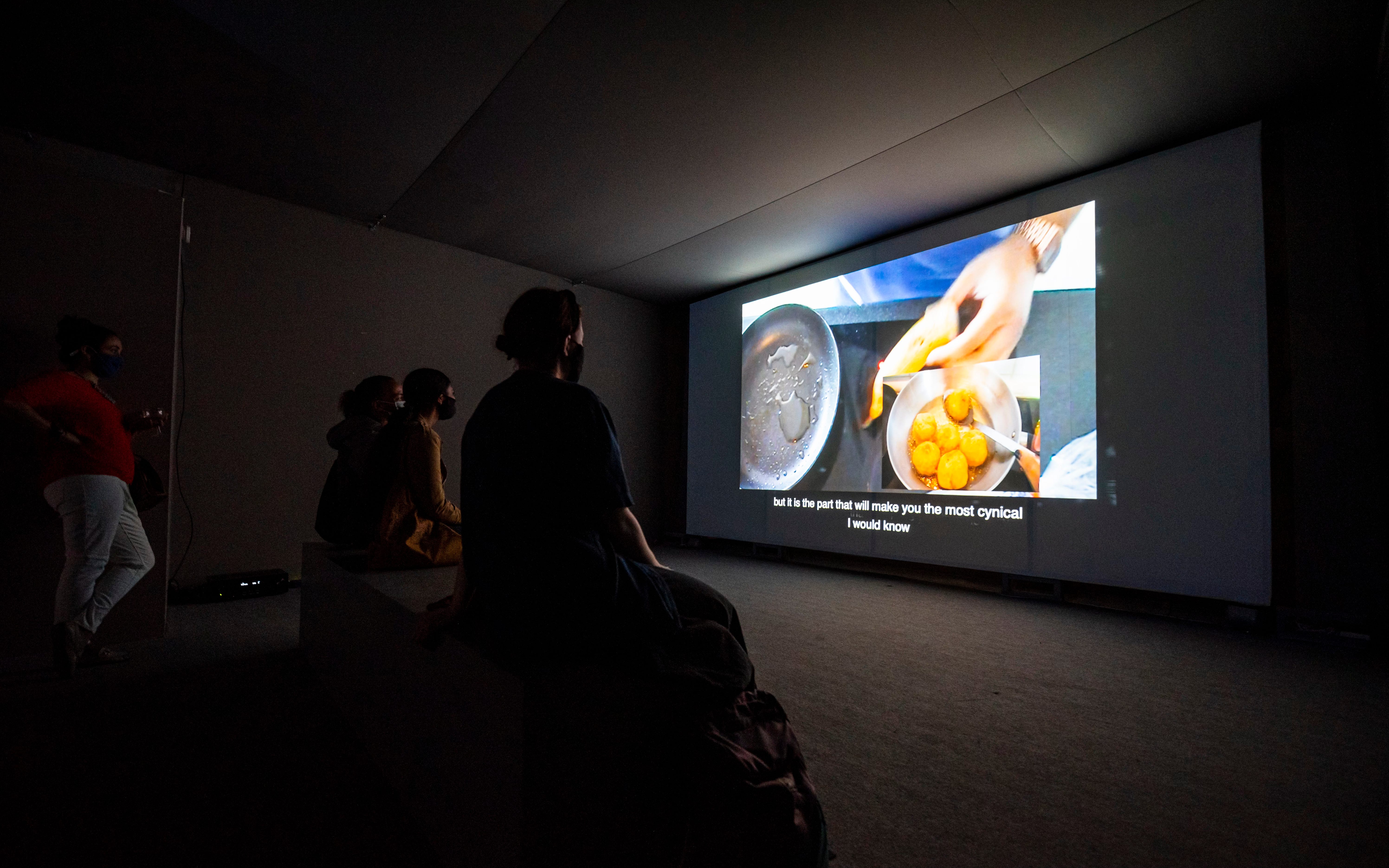
Image credit: Great-ish: The Gaslighting of a Nation at Backlit, Nottingham, Tom Platinum Morley, 2021
Like, Johnson, I read the board’s statement regarding their decision to keep the statue up. I disagree with it. In the last 5 years, Britain’s attempt to appease everybody (which is impossible and unjust but fits the very character of a cowardice government) has given us many examples of removing an offensive piece whilst not erasing the history of it (they usually put a little bit of white card with some text on it to explain the monument and why and how it got there). As uninspired and compromising as this act is, the board could have followed suit. 1
Since this moment that happened in 2021, I have since begun my PhD where I am focusing on understanding home and how we build homes for ourselves. My catalyst for this understanding is by researching the experiences of Jamaican migrants and transgender people, since both groups of people experience a nuanced and complex type of movement across borders whilst still negotiating their identities, both of which apply to my own identity journey.
The best place to start in terms of context and finding other artists who are also interpreting the theme of home is at the Museum of the Home itself. Only 1 hour 41 minutes away from my home by train, I make my way to London with a suitcase full of clothes and a new sketchbook in my backpack.
I start at the gallery this week and I’m not sure how I will feel about seeing the statue, how I might handle this tender part of me that knows that this country does not consider the feelings of Black people. The statue is both a clump of metal that should not be idolised and fought for with such vigor and equally a clump of metal that symbolises the oppression of and violence towards Black people. Ironically, the work that I exhibited at the gallery back in 2021 comments on this very gaslighting that happens to you when you are Black in Britain; this ability for an all white board to try to explain away why a statue of a slaveowner should remain standing even though the area that it stands in is predominantly non-white and hosts the work of and is visited by marginalised artists.
I write all this to express that I am holding feelings of anxiety, disapproval and excitement and gratitude for working at Museum of the Home for the next 4 weeks. I am unsure what I’ll feel and how I’ll handle it but I am sure I’ll share those reflections here in a the next blog.
My name is Exodus, many of my loved ones call me Exo for short. Exo has become a personal vow to love and hold myself and others, so with hugs and kisses, I thank you for reading. xoxoxo

Oh, and while you are here, please donate what you can to my top surgery Gofundme organised by my wonderful partner. :-)
Since 2021 MotH have done a lot of work and been in conversation with the community about how to better respond to this issue, I think this is the right move but the statue’s presence is still difficult for Black gallery goers. Anybody interested in this ongoing conversation and the statue’s future can see more via the Museum’s website.